 Abdulhafiz Teslim
As Newcastle United prepare for what could prove to be one of the most pivotal transfer windows of the Saudi-backed era, manager Eddie Howe finds himself operating under financial constraints unlike any he has experienced since arriving at St James’ Park in November 2021.
Despite the enormous wealth of the club’s ownership group, the reality of modern football finance means Howe is working with the smallest effective transfer budget of his Newcastle tenure. The Magpies’ failure to qualify for European competition during the 2025-26 season has significantly reduced available revenue streams, while the financial impact of previous transfer windows continues to affect the club’s spending capacity. Recent reports suggest Newcastle’s hierarchy now prefers to discuss “headroom” rather than traditional transfer budgets, reflecting the increasingly complex financial environment surrounding elite football clubs.
This represents a dramatic shift from the early days of the Public Investment Fund era, when Newcastle supporters expected the club’s immense ownership wealth to translate into unrestricted spending power. Instead, Profit and Sustainability regulations, UEFA financial rules, and the club’s own long-term strategic planning have combined to create a far more challenging landscape for Eddie Howe and sporting director Ross Wilson.
The situation has been further complicated by Newcastle’s inability to consistently compete with Europe’s financial heavyweights when it comes to player salaries. While the Magpies have significantly increased their wage structure since the takeover, they remain unable to match the packages offered by clubs such as Real Madrid, Manchester City, Paris Saint-Germain, Bayern Munich, and even several of their direct Premier League rivals.
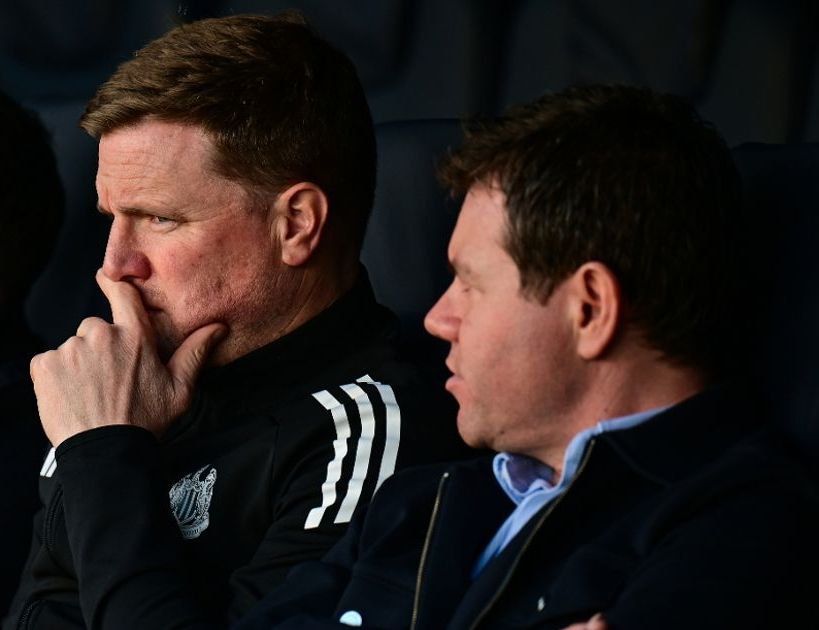
This financial reality has already influenced Newcastle’s recruitment strategy. Rather than competing head-to-head for established global stars, the club has increasingly shifted towards identifying emerging talent, undervalued assets, and players with significant development potential. The approach reflects both necessity and strategic adaptation as Newcastle attempt to build a sustainable model capable of challenging football’s traditional elite.
The sale of Anthony Gordon to Barcelona earlier this summer provided some financial breathing room, but sources close to the club suggest further player departures could still be required if Howe is to secure all of his priority targets. Reports have indicated that the Newcastle manager would ideally like to bring in between four and six new players before the transfer window closes, a target that may prove difficult without generating additional income through player sales.
The challenge facing Howe extends beyond transfer fees alone. Newcastle’s inability to consistently offer the salaries demanded by elite-level players has become an increasingly significant obstacle in negotiations. Last summer demonstrated just how difficult it has become to convince top targets to choose Tyneside over clubs with larger commercial revenues, greater recent success, and superior wage structures. Howe himself has previously acknowledged that attracting world-class talent remains one of the club’s greatest challenges, even during periods when European football was available.
For Newcastle supporters, the current transfer window represents an uncomfortable but perhaps necessary reality check. The days of unlimited spending were never truly possible under modern football regulations, and the club’s long-term ambitions now depend as much on intelligent recruitment and player trading as they do on ownership wealth.
As a result, Eddie Howe enters the summer of 2026 facing arguably the greatest transfer challenge of his Newcastle career: rebuilding and strengthening a squad while operating with fewer financial advantages than ever before. Unless further major sales materialise, this may indeed be the smallest transfer kitty the Newcastle manager has had to work with since taking charge nearly five years ago.

 Abdulhafiz Teslim
 admin
admin