 Abdulhafiz Teslim
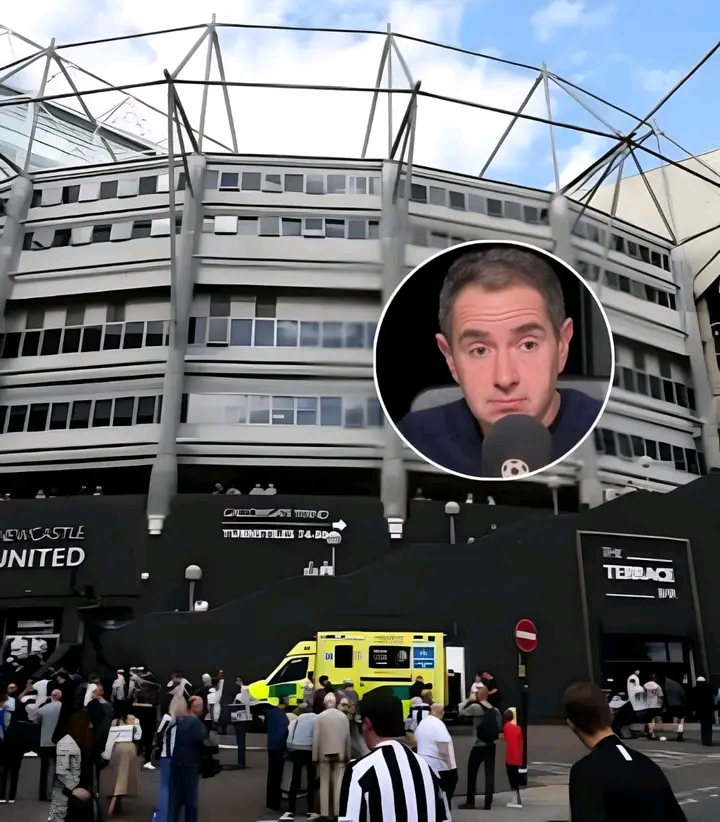
Newcastle United’s ambitions to transform St James’ Park could face a significant financial and logistical obstacle, with the club and its Saudi-backed ownership group reportedly still without an obvious solution for increasing capacity without taking a serious hit to matchday income.
The Magpies have made no secret of their desire to grow St James’ Park as part of their long-term plans. The stadium currently holds 52,719 supporters following recent improvements, including an increase of around 500 seats. However, taking the next major step could prove considerably more complicated than simply adding more seats.
The biggest problem is the stadium’s location.
Unlike clubs that have been able to move temporarily while major construction work takes place, Newcastle cannot easily shut down large sections of St James’ Park without affecting the revenue generated from home fixtures.
That issue has now been highlighted by financial expert Stefan Borson, who believes the club faces a difficult balancing act between expanding the ground and protecting the income that has become increasingly important to Newcastle’s financial model.
Borson, a former Manchester City financial adviser, has warned that rising global interest rates could make a major redevelopment project considerably more expensive.
He explained that much could depend on the current funding position of the Public Investment Fund, while also suggesting that additional commercial or residential development could potentially form part of a wider solution.
That is particularly important because Newcastle are no longer simply trying to improve the appearance of their historic home.
The club are attempting to build a stadium capable of supporting their ambitions at the top end of English football, where increased matchday capacity, premium hospitality and commercial opportunities can all contribute to long-term revenue growth.
Newcastle have already demonstrated a willingness to invest heavily in St James’ Park.
During the summer, the club announced a £10 million transformation of its hospitality offering, while another £3.6 million was invested in a new pitch structure. Further money has also gone into floodlighting, communications infrastructure, Wi-Fi and other stadium improvements.
Those upgrades show that the stadium remains central to the club’s long-term strategy.
However, increasing capacity on a much larger scale presents a completely different challenge.
Tottenham Hotspur provided one of the clearest examples of how a Premier League club can tackle a huge stadium project by temporarily leaving its traditional home. Spurs played their home matches at Wembley while their new stadium was constructed, allowing work to continue without the same restrictions that would have existed had they remained at White Hart Lane.
Newcastle do not appear to have such an obvious alternative.
A temporary move would need to provide the required capacity, meet Premier League standards and be practical for supporters, while also preserving as much of the club’s matchday income as possible.
Closing sections of St James’ Park while continuing to play there could therefore be considered, but that would inevitably reduce the number of supporters able to attend matches during the construction period.
That creates the central financial dilemma.
Newcastle need a bigger and more commercially powerful stadium to increase future revenue, but the process of creating it could temporarily reduce one of their most important revenue streams.
The issue comes at a time when the club are already placing greater emphasis on becoming financially sustainable. Newcastle reported record revenue of £335.3 million for the year ending June 2025, with commercial income rising significantly.
That growth strengthens the argument for eventually expanding St James’ Park, but it also makes protecting the club’s revenue increasingly important.
For PIF and Newcastle’s other ownership interests, the challenge will therefore be finding a solution that works both financially and practically.
The possibility of incorporating residential or commercial development around the stadium could become part of the wider conversation, particularly given St James’ Park’s prime location in the heart of Newcastle.
For supporters, however, the hope will be that any redevelopment can be completed without damaging the atmosphere and identity that make St James’ Park one of English football’s most recognisable stadiums.
The club have already shown that smaller improvements can be delivered while maintaining normal matchday operations. The question now is whether a much more ambitious expansion can be achieved without sacrificing too much along the way.
Newcastle’s ambitions have grown dramatically since PIF became involved, and the club now have aspirations that demand infrastructure capable of matching them.
But as Borson’s warning demonstrates, expanding St James’ Park may not simply be a question of how many extra seats can be built.
It could ultimately come down to how much Newcastle are prepared to spend, how much revenue they are willing to sacrifice during construction and whether an alternative funding model can be created around the stadium.
For now, the Magpies appear to have a major decision to make.
The dream of a significantly larger St James’ Park remains alive, but finding a financially sustainable route to make it happen could be one of the biggest off-field challenges facing the club in the coming years.


 admin

 Abdulhafiz Teslim