
 Abdulhafiz Teslim
Newcastle United may have been denied a famous opening-day victory by Liverpool’s dramatic late penalty, but the 2-2 draw at St James’ Park revealed something potentially far more important than the controversial decision.
It gave supporters their first real glimpse of what Matthias Jaissle wants his Newcastle side to become.
And the numbers tell a fascinating story.
Newcastle did not need to dominate possession to cause Liverpool serious problems. Instead, Jaissle’s side appeared comfortable allowing the visitors to have more of the ball while looking to attack with speed, aggression and purpose whenever opportunities opened up.
That could prove to be one of the biggest tactical changes of the new era.
Rather than obsessing over possession for possession’s sake, Newcastle looked dangerous when they transitioned quickly. The Magpies were prepared to absorb pressure, win the ball and immediately look forward.
The approach produced an early reward.
Anthony Elanga put Newcastle ahead after just five minutes, giving the home supporters exactly the start Jaissle would have wanted. Liverpool eventually responded through Cody Gakpo, but Newcastle refused to collapse.
Instead, Joe Willock restored the advantage early in the second half.
That response was significant.
It showed that Newcastle could remain dangerous even when Liverpool controlled large portions of the game.
And that is where the possession statistic becomes particularly interesting.
Newcastle finished the match with only around 39 per cent possession, yet they still managed to score twice against a side expected to dominate the ball. The Magpies were not simply sitting back and hoping for a mistake; their direct attacking moments repeatedly caused Liverpool problems.
The result provides an early indication that Jaissle may be building a Newcastle team based around intensity, verticality and transition football.
That does not mean Newcastle will surrender possession in every match.
But it does suggest that the German coach is not interested in making possession the sole measure of control.
For Newcastle supporters, that could be a fascinating development.
The club has undergone an enormous transformation during the summer. Several established players have departed, while younger players have arrived as part of a new recruitment strategy. Jaissle has already admitted that the squad still needs “adjustments” before the transfer window closes.
That makes the Liverpool performance even more encouraging.
The team is still learning a new system, yet it managed to make Liverpool uncomfortable at St James’ Park.
There is also an important psychological element.
Newcastle conceded an equaliser but immediately found another way to hurt Liverpool. When the visitors scored through Gakpo, the home side did not retreat into survival mode.
Willock’s goal put Newcastle back in front and sent St James’ Park into another eruption.
That resilience is exactly what Jaissle will want to see from a team undergoing such a significant rebuild.
The late penalty obviously changed the final result.
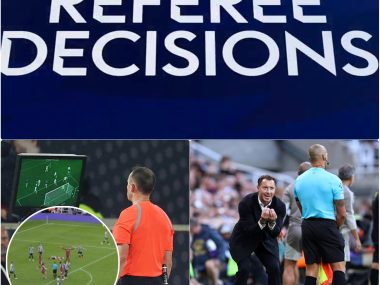
Liverpool were awarded a stoppage-time spot-kick after Newcastle had appeared to be on course for all three points, with Dominik Szoboszlai converting deep into added time. Jaissle subsequently described the decision as “really soft” but was careful about how strongly he criticised it because of the possibility of disciplinary consequences.
However, focusing exclusively on the penalty risks missing the bigger story.
Newcastle had already demonstrated that they could compete with Liverpool without needing to control the game in the traditional manner.
That is potentially the biggest takeaway from the afternoon.
Jaissle’s Newcastle could become a side that opponents hate playing against.
A team that does not need 60 or 65 per cent possession to dominate the important moments. A team capable of defending compactly, winning the ball and attacking space before opponents have time to recover.
And if Newcastle continue adding the right players before the transfer deadline, that style could become even more dangerous.
Jaissle has already stressed that the club is aligned on making further squad adjustments, while also acknowledging that young arrivals will need time to adapt to Premier League football.
The Liverpool draw therefore should not simply be remembered as the match Newcastle almost won.
It could eventually be remembered as the first major warning sign that Jaissle’s Newcastle are going to play football very differently.
The possession numbers might suggest Liverpool had more control.
The scoreline tells us the two teams were inseparable.
But the bigger picture tells another story.
Newcastle have a new manager, a new squad structure and potentially a new tactical identity.
And after just one Premier League match, Jaissle may already have shown the rest of the division exactly how dangerous his Newcastle can become.

 admin


 Abdulhafiz Teslim